Key Takeaways
- Returning a young athlete to sport is not the same as returning an adult. Growing bodies follow different rules.
- Being pain-free is not the same as being ready. The specific demands of the sport have to be rebuilt and tested.
- Early sport specialization is linked to higher injury rates and burnout, with no long-term athletic advantage.
- Concussion return-to-play follows its own sequenced protocol, guided together with your child’s physician.
Reviewed by Chandana Dash, OTR/L — Co-founder, Synergy Therapeutic Group
Return to sports is the structured rehabilitation and progression process for young athletes recovering from injury or surgery — restoring not just baseline function but the specific demands of the sport.
It applies to young athletes recovering from concussions, joint injuries, fractures, sports-related surgeries, and the chronic overuse injuries common in single-sport specialization. The most common signs that return-to-sport progression is incomplete are residual pain, weakness compared to the uninjured side, fear of re-injury, altered movement patterns, and the sense that the athlete is “not quite themselves” on the field.
Unlike conventional approaches that clear athletes when pain is gone, Synergy Therapeutic Group treats return-to-sports recovery by progressing the athlete through sport-specific demands — strength, power, agility, sport mechanics, and confidence — before clearing them to play.
Getting a child back to sport after injury is not just about waiting for the body to heal. It is about rebuilding capacity, confidence, and movement quality — together.
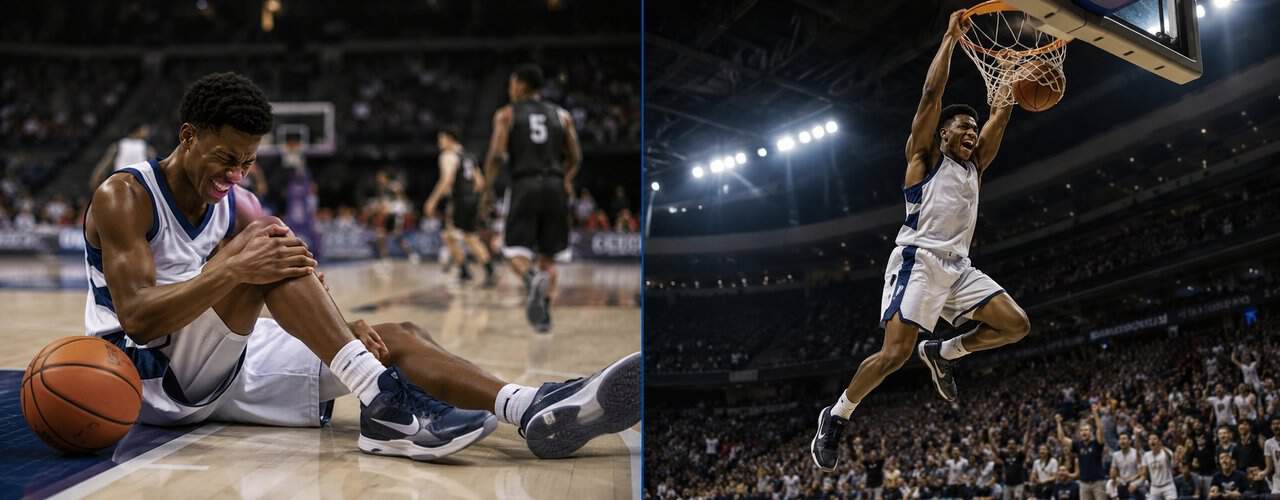
When a child gets hurt, the path back to play has phases. Acute healing is the first. Restoring range of motion and strength is the second. Restoring sport-specific movement patterns is the third. Restoring the confidence and reactive timing that real competition demands is the fourth. Skipping any phase increases re-injury risk and often shortens athletic careers. A thoughtful return-to-sport plan is what separates kids who come back stronger from kids who keep getting hurt.
Why pediatric return to sport is different from adult
Children’s bodies are not small adult bodies. Growth plates are still open. Bones are still elongating. Coordination is still developing. The brain’s regulation of pain and effort works differently. A return-to-sport protocol designed for an adult is often wrong for a child or adolescent.
Pediatric return to play has to account for the child’s developmental stage, growth-related vulnerabilities, the specific sport, the position they play, and the emotional component — kids and teens are often more impacted by being out of their sport than the injury itself. Rushing them back without addressing all of that is a recipe for re-injury, chronic problems, or a kid who quits the sport they loved.
Common situations we help with
- Recovery from sports-related fractures, sprains, and strains
- Concussion recovery and return to play after head injury
- Post-surgical recovery (ACL reconstruction, fracture fixation, shoulder repairs)
- Overuse injuries — stress fractures, growth-plate-related injuries, repetitive strain
- Recovery after prolonged inactivity (illness, hospitalization, deconditioning)
- Building general athleticism in young athletes whose foundations are uneven
How we approach pediatric return to sport at Synergy
The work has phases. Each phase has clear criteria for moving to the next. Skipping ahead based on calendar time alone is how kids get re-injured.
Phase 1 — protect and restore. Honor the healing tissue. Restore pain-free range of motion. Begin gentle strength work. Address any compensations that developed during the injury period. Coordinate with the surgeon or physician where applicable.
Phase 2 — rebuild the foundations. Full range of motion. Symmetrical strength compared to the uninjured side. Postural control and core stability. Basic movement patterns — squat, lunge, hinge, push, pull — performed cleanly. This phase is often skipped in adult-focused care and is essential for kids.
Phase 3 — sport-specific movement. Loaded movement, change of direction, jumping and landing mechanics, agility work tailored to the sport. We test movement quality, not just whether the child can do the activity. A child who can run but lands poorly is set up for the next injury.
Phase 4 — reactive and competitive readiness. Reactive drills that simulate game conditions. Decision-making under fatigue. Sport-specific scenarios. Gradual return to practice, then to limited competition, then to full participation. Confidence is built deliberately, not assumed.
Concussion recovery deserves its own note
Concussion is not just a hit to the head — it is a brain injury that affects vision, balance, regulation, and processing. Return to play after concussion has its own carefully sequenced protocol, often guided by current medical guidelines and your child’s physician. We support the OT-relevant pieces — visual and vestibular recovery, cognitive load management, gradual exertion progression, and the school accommodations that may be needed during recovery.
The biggest risk in concussion is returning too soon. A child who plays again before their brain is fully recovered is at higher risk of a second concussion that is more serious. Patient, sequenced return is the only safe path.
Related areas
- Post-surgical rehab — the adult / general framework
- Motor planning — relevant when kids return to complex sports
- Dyspraxia — kids with motor coordination challenges need extra care in return-to-play
- Sensory processing — concussion recovery often involves sensory regulation
Recommended Reading
Deepen your understanding with these related articles from our health blog:
Frequently asked questions
When can my child return to sports after a concussion?
After a structured progression — typically over a week or longer — through symptom-free rest, light aerobic activity, sport-specific drills, non-contact training, and finally full contact return. The progression is driven by symptom response, not the calendar. Most concussion protocols are guided by your child\’s physician with PT support.
At what age should children specialize in one sport?
Generally not before adolescence — and even then, with care. Research shows that early specialization is associated with higher injury rates, more burnout, and no advantage in long-term athletic outcome. Multi-sport play through early adolescence builds broader athleticism and lower injury risk.
How do I know my child is ready to return to play after an injury?
Three indicators: pain-free at rest and during sport-specific movement, full and symmetrical strength compared to the uninjured side, and confidence in the movements that caused the original injury. We test movement quality, not just whether the child can do the activity. A child who can run but lands poorly is set up for the next injury.
Are growth-plate injuries serious in young athletes?
They can be — growth plates are weaker than bone and ligament in still-growing kids, and growth-plate injuries can affect long-term limb development if not managed well. Most heal completely with appropriate care. The key is recognizing them early and following the medical protocol; physical therapy supports both healing and the safe return to sport.
What sports are safest for children with chronic conditions?
It depends on the condition — but in general, individual, self-paced activities (swimming, biking, hiking, yoga, martial arts) carry lower injury risk than high-contact team sports. Many children with chronic conditions do well in adapted sports programs that meet them at their ability level. The goal is lifelong physical activity, not childhood athletic achievement.
This page was reviewed by Chandana Dash, OTR/L, who has practiced pediatric occupational therapy for more than 32 years. She specializes in family-centered care for children with sensory, developmental, motor, and neurodevelopmental challenges. She is the co-founder of Synergy Therapeutic Group in Carbondale, Illinois.
When can I return to sports after an injury?
It depends on the injury, the sport, and your progress through return-to-play criteria. We do not clear athletes based on time alone — we use objective testing (strength, agility, sport-specific drills) to confirm you are ready. Premature return is the number one cause of re-injury.
What is return-to-sport testing?
A battery of objective tests measuring strength (compared to your other side and to baseline), single-leg stability, hopping power, agility, and sport-specific movements. We track the data so you and your coach can see when you have truly recovered, not just “feel” ready.
Can physical therapy reduce my risk of sports injury?
Yes — and this is what most athletes skip. Pre-season screening identifies movement deficits, asymmetries, and risk factors before they cause injury. Correcting them takes weeks; recovering from a tear takes months or surgery. We work with athletes pre-season for injury prevention, not just post-injury rehab.
This page is for general education, not medical advice. Everyone’s body and history are different — for guidance on your specific situation, talk with a licensed physical or occupational therapist. Synergy Therapeutic Group · 1110 N Cedar Court, Carbondale, IL 62901 · (618) 243-7822.